These cases are public and documented. We cite them not to humiliate the dead but because most of them spent their last months begging strangers not to follow them.
All cases below are publicly documented. Sources are indicated on each card.
Yul Brynner
1920-1985, actor, The King and I
Lung cancer. Weeks before dying he recorded a message that aired after his death: "Now that I'm gone, I tell you: don't smoke." One of the most famous anti-tobacco messages in history, delivered by a dead man.
American Cancer Society PSA, 1986
Wayne McLaren
1940-1992, rodeo rider and Marlboro model
Lung cancer at 51. He spent his final months campaigning against tobacco while the company denied he had ever modeled for them. He died with his mother holding his hand, telling her: 'I've spent the last month of my life in an oxygen tent telling kids not to smoke.'
Associated Press obituaries, 1992
David McLean
1922-1995, the classic 'Marlboro Man'
Lung cancer. His widow sued Philip Morris, alleging he was required to smoke up to five packs per take during shoots. A second Marlboro Man dead from the product he sold.
McLean v. Philip Morris court filings
Eric Lawson
1941-2014, Marlboro Man 1978-1981
Died of COPD, breathing through supplemental oxygen. He had become an anti-smoking advocate, appearing in campaigns admitting he couldn't quit for decades. Third Marlboro Man killed by smoking-related disease.
Associated Press, January 2014
Terrie Hall
1960-2013, CDC campaign face
Started smoking at 13. Thirteen cancer diagnoses. Lost her voice box, spoke through an electrolarynx, and filmed ads showing viewers how she got dressed: wig, hands-free device, scarf over the hole in her throat. The CDC credits her ads with pushing 1.6 million Americans to attempt quitting.
CDC 'Tips From Former Smokers' campaign
Debi Austin
1950-2013, California anti-tobacco icon
Started at 13. After a laryngectomy she filmed the famous 'Voicebox' ad: she inhaled a cigarette through the stoma in her throat while saying the industry says nicotine isn't addictive. She died of cancer after 40 years of fighting it.
California Department of Public Health
Bryan Lee Curtis
1965-1999, Florida
Started at 13. Diagnosed with small-cell lung cancer at 33; dead 9 weeks later at 34. His mother released the photo of his emaciated body taken minutes after death, next to a photo from 2 months earlier holding his son. He asked her to show the world 'what cigarettes do'.
St. Petersburg Times, 1999
Barb Tarbox
1961-2003, Canadian model
Lung and brain cancer at 41. She spent her final 7 months visiting schools, bald from chemotherapy, showing teenagers what dying of glamour looks like. Tens of thousands of students heard her final message in person.
Edmonton Journal / CBC archives
Nat King Cole
1919-1965, singer
One of the greatest voices of the 20th century, gone at 45 from lung cancer. He believed smoking deepened his voice and smoked heavily on doctor's advice-era logic. His last recordings were made between radiation sessions.
Public biographies and hospital records reported by AP
King George VI
1895-1952, King of the United Kingdom
The heavy-smoking king of 'The King's Speech'. Arterial disease forced doctors to remove his entire left lung in 1951; he died in his sleep months later at 56. His daughter Elizabeth learned she was queen while he was buried. Smoking shortened a reign and changed history.
Royal medical histories, public record
What it actually looks like
Shock therapy works when the abstract becomes visual. These are clinical illustrations of what smoking does inside a body. Look at them slowly, especially on a craving day.
Healthy lung vs smoker's lung
Tar does not wash out. It settles in the airways once the cilia that clean them are paralyzed and destroyed, and the enlarged black air spaces of emphysema never return to normal.
Medical illustration generated with AI. Not a photograph of a real patient.
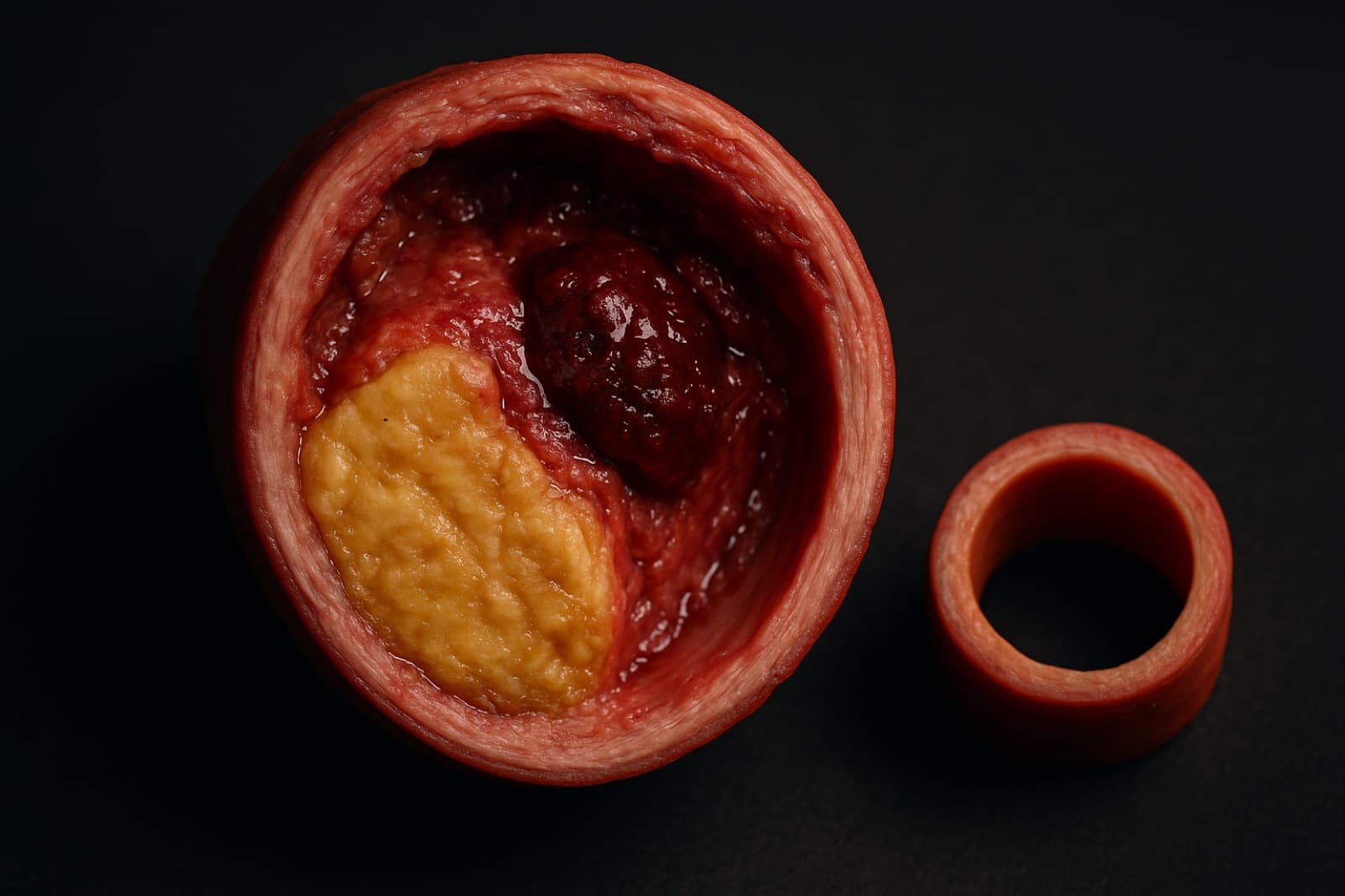
The artery that causes a heart attack
Most heart attacks are not a slow blockage. An inflamed plaque ruptures and the sticky blood of a smoker seals the artery in seconds. This is what the last minute looks like from inside.
Medical illustration generated with AI. Not a photograph of a real patient.
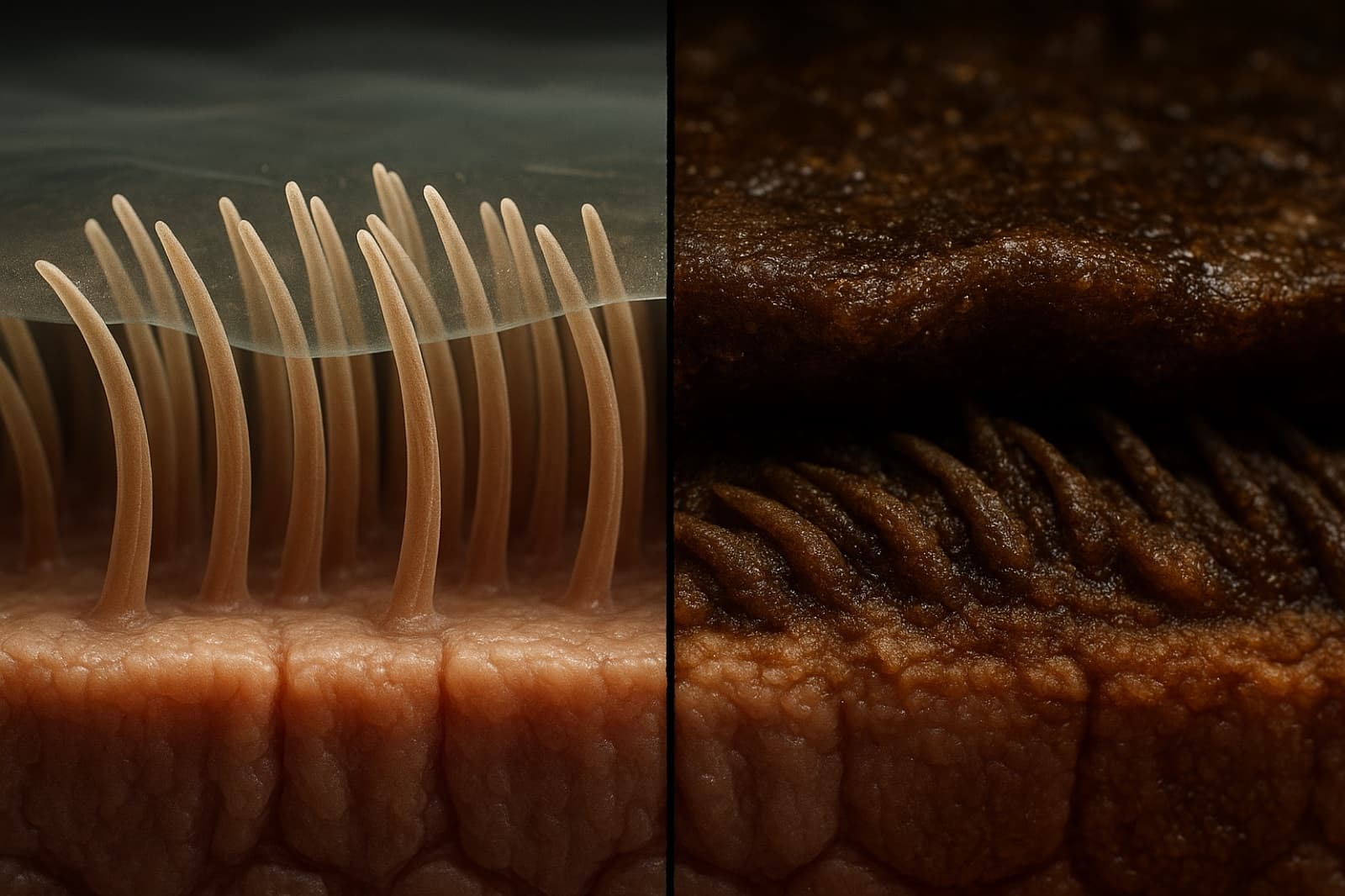
The cleaning system, paralyzed
A billion microscopic hairs beat 10 to 20 times per second to sweep dirt out of your lungs. Hot smoke stops them within minutes and destroys them with repetition. This is the machine you switch back on when you quit.
Medical illustration generated with AI. Not a photograph of a real patient.
Graphic clinical content
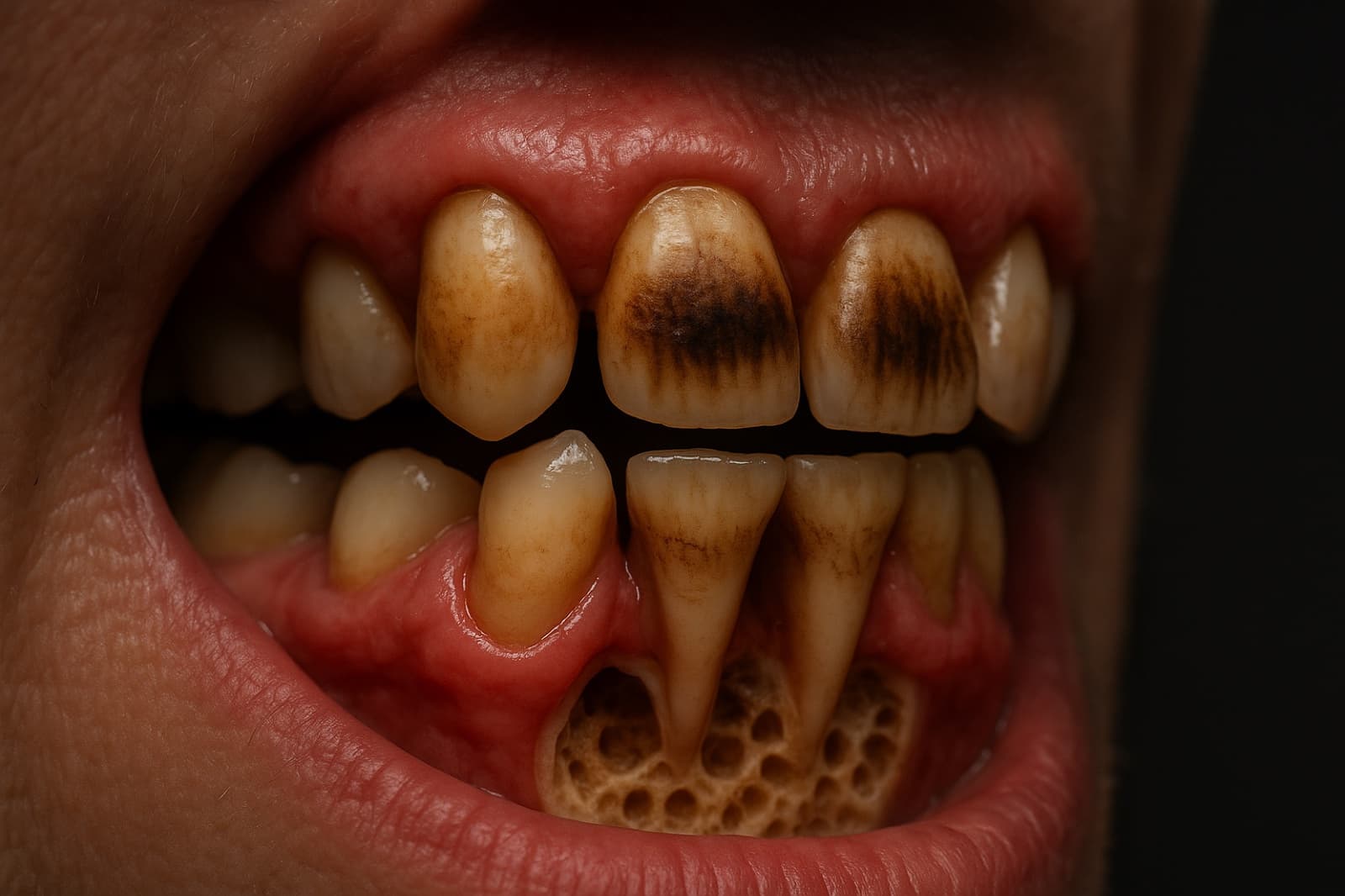
The gums that stopped warning you
Smoking constricts the vessels of the gums, so they bleed less. The early warning sign disappears while the infection keeps eating the bone that holds your teeth. By the time they feel loose, this is the stage underneath.
Medical illustration generated with AI. Not a photograph of a real patient.
Graphic clinical content
Buerger's disease
Thromboangiitis obliterans clots the vessels of hands and feet, almost exclusively in smokers, often in their twenties and thirties. It ends in gangrene and amputation. The only treatment that works is total cessation.
Medical illustration generated with AI. Not a photograph of a real patient.
Breathing through your neck
Laryngeal cancer is overwhelmingly a smoker's disease. Treatment often means removing the voice box: a permanent hole in the neck, and learning to speak through a machine. Terrie Hall and Debi Austin lived exactly this.
Medical illustration generated with AI. Not a photograph of a real patient.
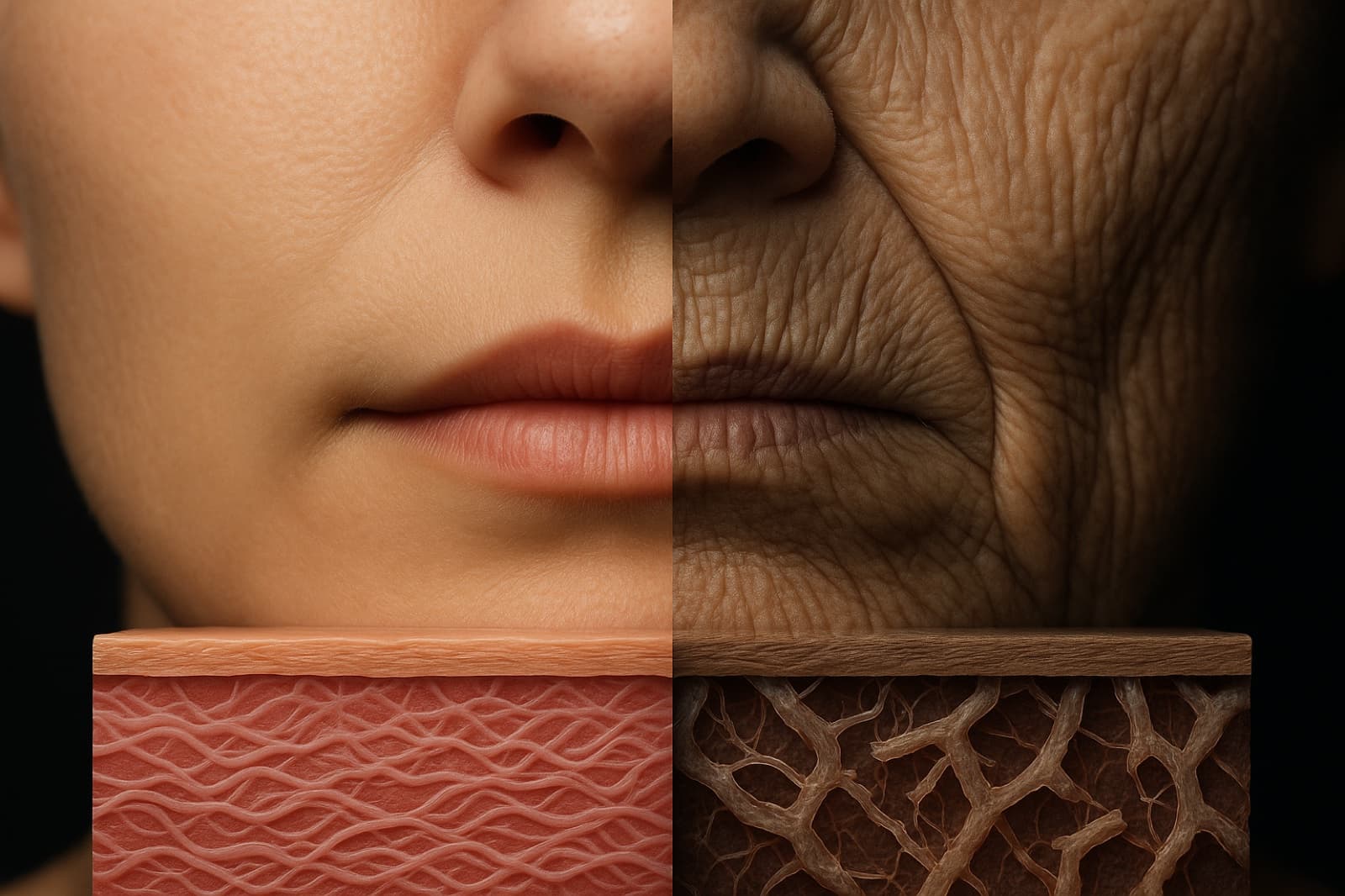
Collagen under demolition
Smoke boosts the enzymes that break collagen down while cutting new collagen production, and starves the skin of oxygen. Dermatologists can identify the pattern on sight. It has a name in the literature: smoker's face.
Medical illustration generated with AI. Not a photograph of a real patient.
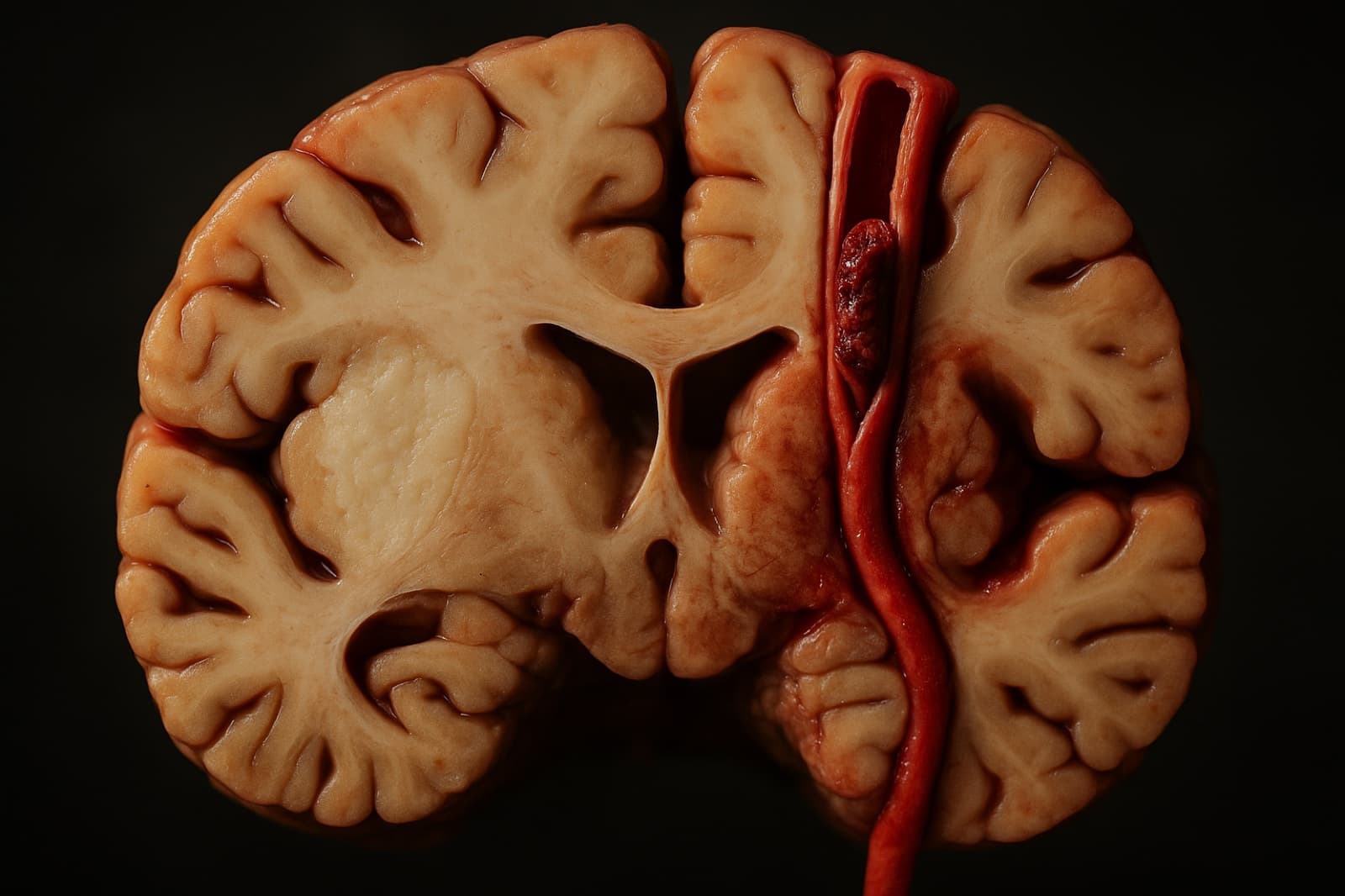
A stroke, from the inside
Smoking roughly doubles the risk of ischemic stroke. A stroke does not always kill: often it takes speech, the use of one side of the body, or the ability to live alone, for decades.
Medical illustration generated with AI. Not a photograph of a real patient.
The rare damage nobody warned you about
Everyone knows about lung cancer. Almost nobody knows these. All are documented medical consequences of smoking.
Buerger's disease
Thromboangiitis obliterans: blood vessels of hands and feet inflame and clot, almost exclusively in smokers. It can end in gangrene and amputation of fingers, toes or limbs, in people in their 20s and 30s. The only effective treatment: total cessation.
Blindness
Smoking doubles the risk of age-related macular degeneration, the leading cause of irreversible blindness in older adults. It also triples early cataract risk and can cause tobacco-alcohol amblyopia: literal poisoning of the optic nerve.
Collapsed lung, out of nowhere
Spontaneous pneumothorax: the lung tears and collapses without an accident, often in young, thin smokers. Smoking multiplies the risk up to 20x in men. Survivors describe the feeling of drowning on dry land.
Pulmonary Langerhans histiocytosis
A rare disease that scars lungs with cysts until breathing fails. More than 90% of adult cases are smokers. Many patients are under 40 when diagnosed.
Erectile dysfunction and infertility
Smoking damages the exact blood vessels an erection depends on: smokers have roughly double the risk of erectile dysfunction. It halves sperm quality, accelerates egg loss and brings menopause forward by about 2 years.
Damage to babies
Smoking in pregnancy raises the risk of miscarriage, ectopic pregnancy, cleft lip and palate, low birth weight and sudden infant death syndrome (SIDS). The placenta does not filter the 7,000 chemicals.
Autoimmune fire
Smoking is the strongest known environmental trigger of rheumatoid arthritis and makes Crohn's disease more aggressive and harder to treat. Your own immune system, weaponized against your joints and gut.
Hearing loss
Smokers have up to 60% higher risk of hearing loss: nicotine and carbon monoxide strangle the microscopic vessels of the inner ear. It is also linked to sudden sensorineural deafness.
Bones that won't heal
Surgeons sometimes refuse elective operations on smokers: fractures take weeks longer to knit, spinal fusions fail up to twice as often and skin grafts die. Some hospitals require weeks of proven abstinence before surgery.
Thyroid eye disease
In people with Graves' disease, smoking multiplies the risk of severe thyroid eye disease: the eyes bulge forward and can lose vision. Smokers respond worse to its treatment.
Bladder and kidney cancer
The carcinogens you inhale are filtered by your kidneys and sit in your bladder for hours. Smokers have about 3 times the risk of bladder cancer. Nobody thinks of their bladder while lighting up.
The voice, gone
Laryngeal cancer is overwhelmingly a smoker's disease. Treatment often means removing the voice box: breathing through a hole in the neck, learning to speak through a machine. Terrie Hall and Debi Austin lived it. Read their cases above.