Skin
6 min read · Published July 24, 2026
Smoker's face: the biology of aging ten years faster
In 1985 a British doctor described a set of facial features so consistent in smokers that it entered the medical literature as smoker's face. It is not vanity: the same process happening in the skin is happening everywhere collagen exists.
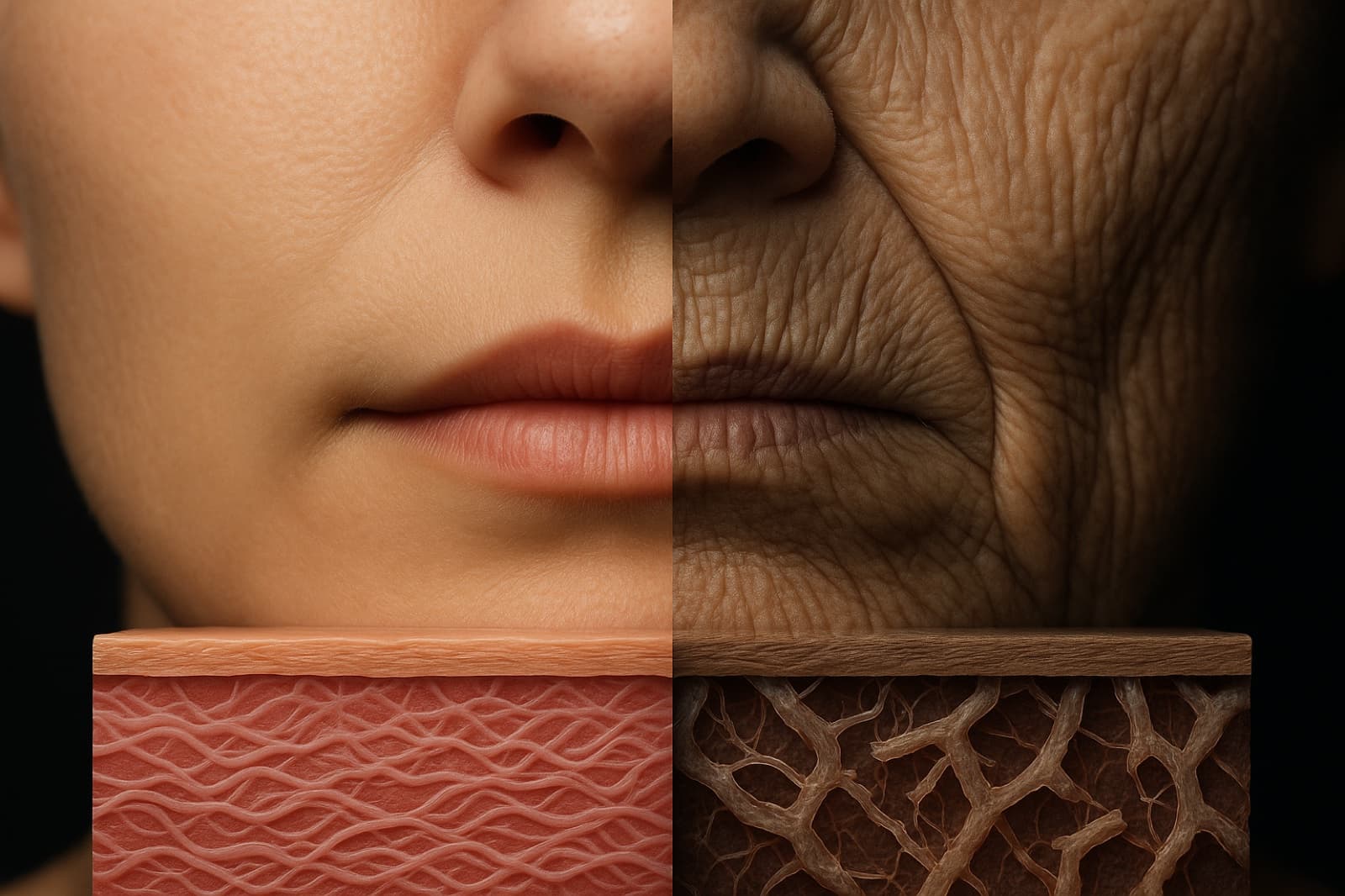
Collagen under demolition
Smoke boosts the enzymes that break collagen down while cutting new collagen production, and starves the skin of oxygen. Dermatologists can identify the pattern on sight. It has a name in the literature: smoker's face.
Medical illustration generated with AI. Not a photograph of a real patient.
Collagen demolition
Skin firmness comes from collagen and elastin. Tobacco smoke boosts enzymes called matrix metalloproteinases that break collagen down, while simultaneously reducing new collagen production.
The result is subtraction on both sides of the equation: you destroy more and build less. Studies in identical twins where one smoked show visibly greater sagging, deeper wrinkles and more pronounced under-eye bags in the smoking twin.
Oxygen starvation and the grey tone
Nicotine constricts the tiny vessels feeding the dermis, and carbon monoxide displaces oxygen in the blood that does arrive. Skin is left chronically underfed.
That produces the characteristic dull, greyish or sallow complexion, plus slower turnover of skin cells. Uneven pigmentation and a leathery texture follow with years of exposure.
Wrinkles with a specific pattern
Two mechanical habits carve their own lines: pursing lips around a cigarette creates vertical perioral wrinkles, and squinting through smoke deepens crow's feet.
Combined with collagen loss, this gives the recognizable pattern of prominent lines radiating from the lips and eyes, gaunt features and sunken cheeks.
The part surgeons care about
Skin that heals badly is a real medical problem. Smoking impairs wound healing so much that plastic and orthopedic surgeons frequently require weeks of abstinence before elective procedures: skin flaps and grafts die more often in smokers.
Smoking is also linked to worse psoriasis, hidradenitis suppurativa and delayed healing of ordinary cuts.
What comes back
Circulation to the skin improves within weeks, which is why many people are told they look better a month or two after quitting: better colour, better oxygenation, less puffiness.
Existing deep wrinkles do not disappear, but the accelerated destruction stops and the skin's repair machinery starts working normally again. From that point you age at the same speed as everyone else instead of faster.
The takeaway
You cannot buy back destroyed collagen with cream. You can stop the demolition today and let the skin resume normal aging instead of accelerated aging.
Knowing the damage is step one. Step two is the counter.
Start your smoke-free clock now and watch these exact systems repair themselves, hour by hour.
Start my counterKeep reading
Educational content based on public health sources including the WHO, the CDC and U.S. Surgeon General reports. It does not replace medical advice: talk to your doctor about your specific case.